
· by Michael Blair, Nashville's Junk Removal
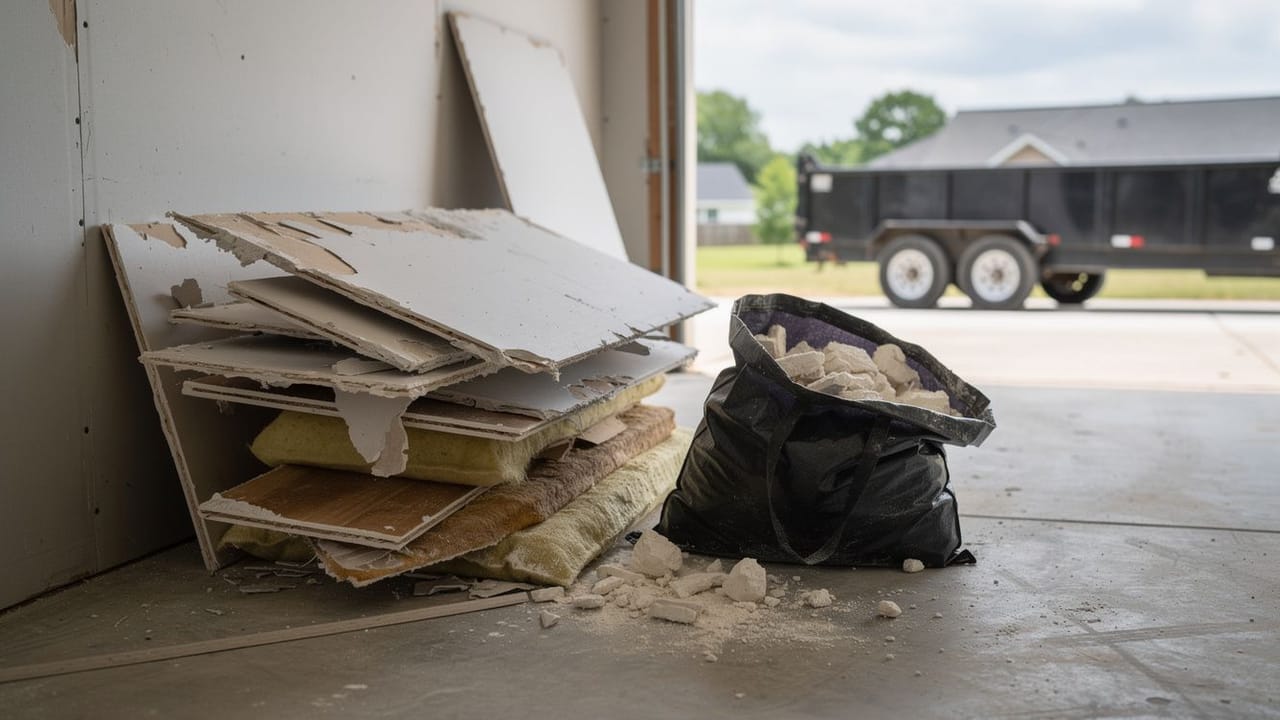
Drywall is usually the biggest part of a tear-out by volume and the part people expect to be easiest to get rid of. It is not hard to haul, but it does not belong in the trash cart, it is heavier than it looks once there is a pile of it, and the way it has to be handled changes if it got wet or if the wall was finished a long time ago. Here is how gypsum board is treated differently from the rest of a remodel, where a Davidson County resident can take a small amount, and what to settle before anyone starts pulling an old wall apart. If you have the whole remodel pile to deal with, our construction and renovation debris service takes the drywall along with the rest.
Why gypsum board is not household trash
A sheet of drywall is a core of gypsum, which is calcium sulfate, wrapped in paper. In a dry wall that core is inert, which is why it works so well as a building material. Buried in volume, it behaves differently. At a construction and demolition landfill in Ohio, the EPA’s response page for Warren Recycling traces the hydrogen sulfide gas there to the breakdown of sulfur-based drywall and gypsum board without oxygen, where a lot of it had been placed. That is one site in another state, not a Tennessee finding, but it is the reason waste regulators keep an eye on how much gypsum goes into one hole and why haulers do not treat it as just more trash.
Tennessee sorts its landfills by what they are permitted to take. The state’s landfill permit page from TDEC describes Class I landfills as the ones for ordinary household waste and Class IV landfills as the ones that take construction and demolition waste, with Class III taking those wastes plus land clearing and farm waste. Drywall torn out of a house is construction debris, so it is part of a separate stream from the kitchen trash, and the place it ends up depends on that sorting. That is also why it cannot simply ride along in a curbside cart or be slipped into a neighbor’s bin.
Taking drywall yourself in Davidson County
Metro’s drop-off rules are narrower for construction material than for anything else. According to Metro Waste Services’ convenience center page, the free allowance at the centers covers a few bags of trash and one bulky item and leaves out construction and demolition material. The paid volume tier for larger loads also excludes it. Construction and demolition material is taken at one center only, Omohundro, for a fee, once a day, and a load cannot be larger than 2 cubic yards. You need a Tennessee driver’s license showing a Davidson County address, and commercial waste is not accepted, so a contractor’s debris cannot go in on a homeowner’s visit.
The same page lists what the centers refuse outright, including brick, concrete, masonry, roofing shingles, siding and anything with asbestos. Drywall is not named on either list. Before you load a car or a pickup with it, check the item in Metro’s Waste Wizard or call Waste Services at 615-924-2633 and ask whether Omohundro will take your gypsum board that day. Two cubic yards also fills up faster than people expect with broken sheets, which stack loosely and leave a lot of air in a truck bed. A single bathroom gutted to the studs can be more than one trip, and a basement or a whole floor is usually a job for a hauler.
Wet, moldy and old drywall
A lot of the drywall we carry out of Middle Tennessee houses comes out because it got wet: a slow leak under a sink, a washer line that let go, a crawl space or basement that took on water. Soaked gypsum is far heavier than dry board, the paper facing can grow mold within days in a humid summer, and the core crumbles when it is lifted. That board gets cut out, bagged in heavy contractor bags or wrapped before it is carried through the house, and loaded so the pieces do not break apart and spread dust and spores down the hallway. It goes in the same construction debris stream as dry drywall, but it is handled more carefully on the way out.
Age is the other question. The EPA’s asbestos overview lists textured paint and patching compounds used on walls and ceilings among the household products that may contain asbestos, and it notes that the risk comes when the material is disturbed or damaged, including during repairs and remodeling. Plenty of older Nashville houses have walls that were patched, skimmed or textured long before anyone living there now. If the joint compound, a textured ceiling or a heavily patched wall may be original to an older house, have a sample tested before anyone sands, cuts or tears it out. We do not take suspected asbestos material, and what junk removal will not take explains where that line sits.
- Clean offcuts and scraps from new work
- Dry torn-out board with paper, tape and screws still on it
- Wet or moldy board that has to be bagged before it is carried
- Old textured or patched walls that should be tested first
What to ask a hauler about drywall
Ask how the load is priced. Drywall is dense, so a hauler that charges only by the space it fills on the truck may quote very differently from one that looks at what the pile is made of. Ask where the debris goes, since construction waste is supposed to end up at a landfill permitted for it rather than wherever is closest. Ask whether the crew will cut out and carry the board from the room or only pick up a pile that is already at the curb, and whether they will take the screws, corner bead and tape with it so nothing is left in the yard. If the drywall has to come down first, our light demolition and tear-out service handles the removal as well as the haul.
Keep the other remodel materials apart where you can. Concrete, brick and tile backer board are much heavier and are not handled the same way, and construction debris removal after a remodel walks through what rides together and what has to be separated. Clean scrap metal from the same job, like corner bead and old ductwork, can go to recycling instead of the landfill; our donation and recycling page covers what we pull out of a load before the rest is disposed of. For drywall coming out of a house anywhere in the county, see junk removal in Nashville, and when you are ready, ask for a free estimate with a photo of the pile or the room it is coming out of.
Sources
- Metro Nashville Waste Services, Convenience Centers — construction and demolition material only at Omohundro, 2 cubic yard limit, residency rule, refused materials, Waste Wizard
- Tennessee Department of Environment and Conservation, Landfill Permit — Class I for household waste; Class III and IV for construction and demolition waste
- US EPA, Response site: Warren Recycling — hydrogen sulfide from anaerobic breakdown of gypsum board in a construction and demolition landfill (Ohio)
- US EPA, Learn About Asbestos — textured paint and patching compounds on walls and ceilings may contain asbestos; risk when disturbed in remodeling