
· by Michael Blair, Nashville's Junk Removal
A garage, attic or shed clear-out almost always turns up batteries: cordless drill packs, a dead laptop, old phones in a drawer, a scooter or e-bike nobody rides. Most of them are lithium-ion, and they are the one small thing in the pile that can start a fire after it leaves the house. Here is why they stay out of the trash and out of our truck, how to handle one that looks wrong, and where they can go in Davidson County.
Why can’t lithium-ion batteries go in the trash?
Lithium-ion batteries are kept out of the trash because they can start fires once they are crushed. The EPA’s page on used lithium-ion batteries says these batteries, and devices that contain them, should not go in household garbage or recycling bins. Its reasoning: a battery can be damaged or crushed in transport or by processing and sorting equipment, and the agency points to a rise in fires at recycling and waste facilities. The U.S. Fire Administration’s battery safety page gives the same instruction: keep them out of the trash and take them to a battery recycling location.
The EPA lists where these cells hide, and a cleanout finds most of them: power tools, laptops, cellphones, tablets, cameras, children’s toys, e-cigarettes and small appliances. Some come out of the product easily; others are built in, and then the whole device is handled as the battery.
Where can I recycle rechargeable batteries in Davidson County?
Metro takes them at two drop-offs. Metro’s household hazardous waste page lists rechargeable batteries among the accepted items at the East and Ezell Pike convenience centers, with no fee, up to 15 gallons or 100 pounds per household a month. It is for Davidson County residents only and refuses business waste. Metro’s electronic waste page also lists rechargeable batteries, and up to 100 pounds of household electronics a day, at the East, Ezell Pike and Omohundro centers.
Neither page names lithium-ion or e-bike packs, so call Waste Services at 615-862-5000 before you drive an e-bike or scooter battery over. Outside Nashville and Davidson County, the EPA suggests the Earth911 database and Call2Recycle for finding a recycler, along with retailers that run take-back programs.
What should you do with a swollen or damaged battery?
Treat a swollen battery as damaged, stop using it, and ask its maker how to handle it. The U.S. Fire Administration says to stop using a lithium-ion battery that gives off an odor, changes color or shape, gets too hot, leaks or makes odd noises. For a damaged one, the EPA says to contact the battery or device manufacturer for handling instructions, and it adds that even a used battery can hold enough energy to injure someone or start a fire.
Until it goes to a recycler, keep it where a fire would have little to catch. The Fire Administration says spare lithium-ion batteries belong away from things that burn, out of direct sun and out of a hot car. A swollen drill pack wedged back into a crowded shelf is the opposite of that.
How we handle batteries during a cleanout
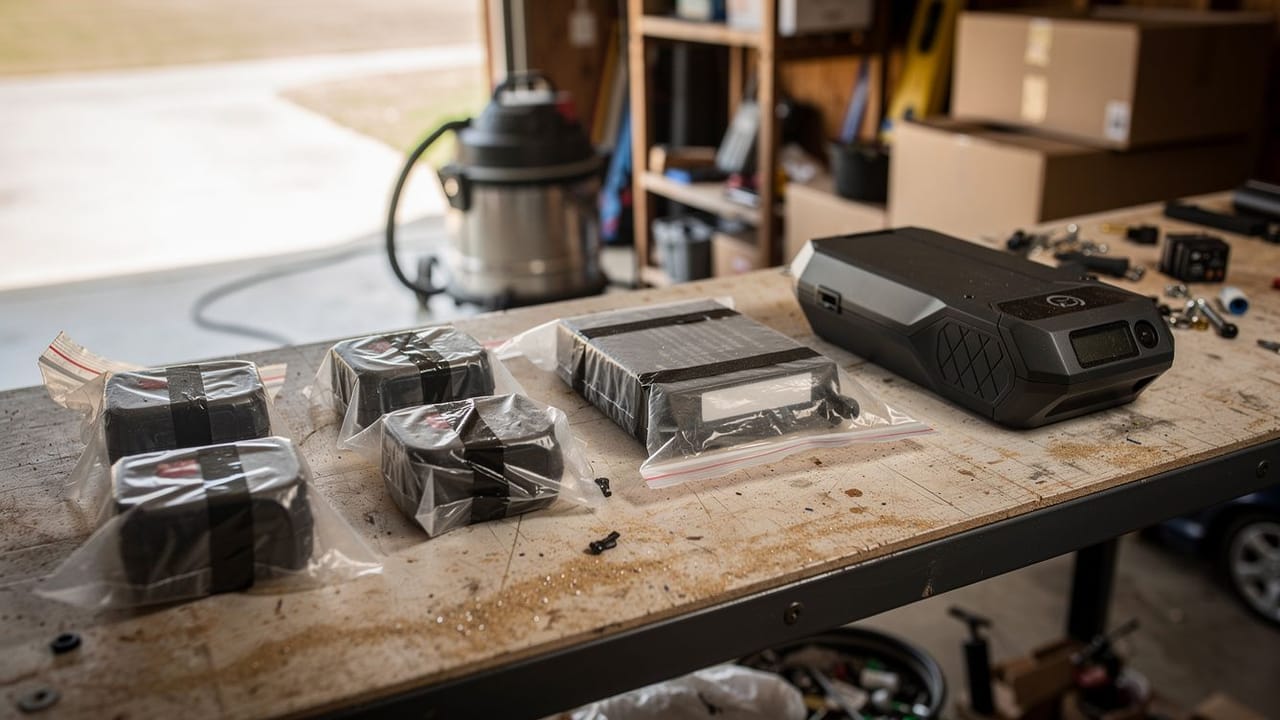
Batteries are set aside as we sort, before anything goes in the truck. Each one gets non-conductive electrical tape over its terminals and its own plastic bag, the two handling steps on the EPA page. Packs that sit inside a tool, a laptop or a toy stay in the device and are bagged with it, since the EPA notes that not every battery is meant to be removed by the user.
We then leave the bagged batteries with you, because Metro’s drop-off takes household loads and turns away commercial ones. A garage and shed cleanout usually produces a small bag of them, alongside the paint and fuel covered in what junk removal cannot take. Everything else, from shelving to old furniture, we load and haul. To book a clear-out, ask us for a free estimate.
Sources
- U.S. EPA, Used Lithium-Ion Batteries — Not in household garbage or recycling bins; damaged or crushed in transport or sorting creates a fire hazard; tape terminals and bag each battery separately; contact the maker about a damaged battery; Earth911 and Call2Recycle; products that use Li-ion cells, including power tools; not all batteries are removable
- U.S. Fire Administration (FEMA), Batteries — Stop using a battery with odor, color change, too much heat, change in shape, leaking or odd noises; do not put lithium-ion batteries in the trash; store spares away from anything that can burn and out of direct sun and hot cars
- Metro Nashville Department of Waste Services, Household Hazardous Waste — Rechargeable batteries accepted at the East and Ezell Pike convenience centers; no fee; up to 15 gallons or 100 pounds per household a month; Davidson County residents only; no commercial waste; questions to 615-862-5000
- Metro Nashville Department of Waste Services, Electronic Waste Recycling — Rechargeable batteries on the accepted list; up to 100 pounds of household electronic waste a day at the East, Ezell Pike and Omohundro centers; no business electronics
FAQ
E-Bike and Tool Batteries: Disposal in Nashville — questions
How do I dispose of an e-bike battery in Nashville?
Keep it out of the trash and the recycling cart. Metro’s household hazardous waste and electronics drop-offs list rechargeable batteries, free for Davidson County residents, but neither page names e-bike packs, so call Waste Services at 615-862-5000 first. Tape the terminals and bag the pack before you move it, as the EPA advises.
Can lithium-ion batteries go in the trash?
No. The EPA says lithium-ion batteries and the devices that contain them should not go in household garbage or recycling bins, because they can be crushed or damaged in transport and sorting and start fires. Take them to a battery recycler or a household hazardous waste collection point, such as Metro’s East or Ezell Pike centers.
Will a junk removal company take a lithium-ion battery?
Ask before the job, because the answer varies by company. We set batteries aside during the sort rather than loading them with the rest, tape the terminals and bag each one, and leave them for you to drop off. Metro’s household hazardous waste drop-off accepts residents’ loads but refuses commercial ones.
How do I get rid of a swollen battery?
Stop using it, keep it away from anything that can burn, and contact the battery or device maker for handling instructions, as the EPA advises for a damaged lithium-ion battery. The U.S. Fire Administration lists swelling, odor, heat, leaking, color change and odd noises as signs to stop using one. Never put it in the trash.
Can I put an old power tool battery in the trash?
No. The EPA names power tools among the products that use lithium-ion batteries and says those batteries do not belong in household garbage. A tool pack comes off easily, so tape its terminals, put it in its own bag and take it to a battery recycler or, in Davidson County, Metro’s free drop-off.